

Why Your LinkedIn Profile Is Not a CV (And What It Should Be Instead)
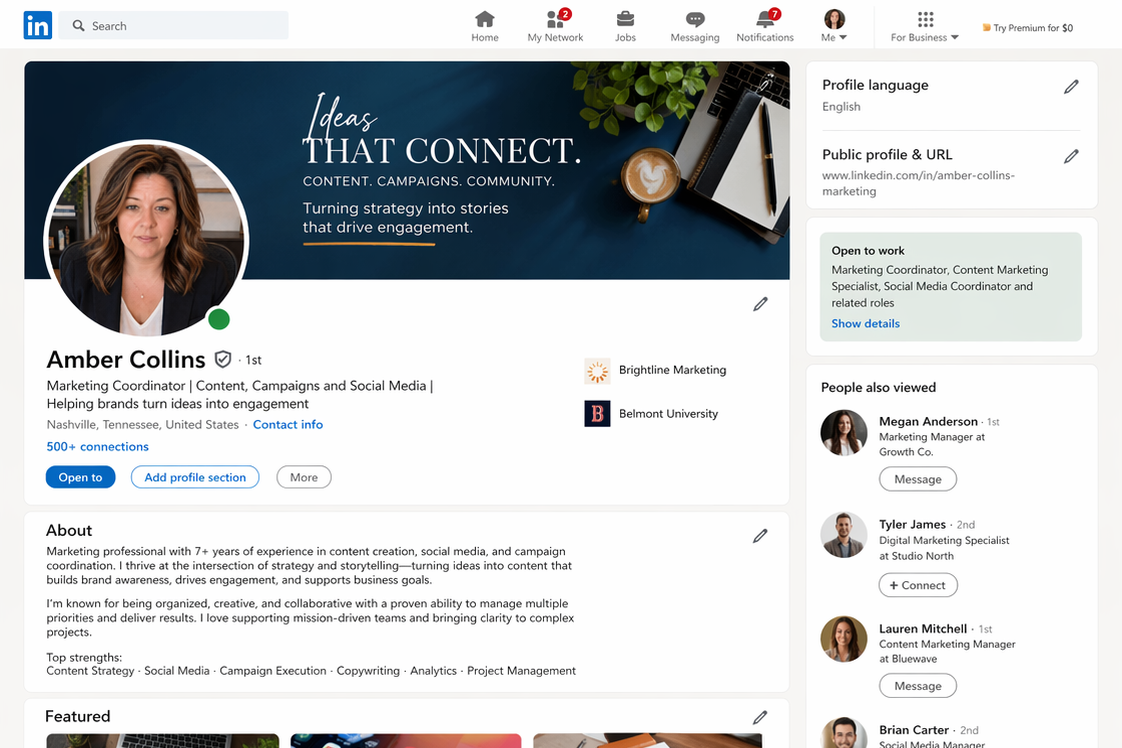
Someone hears your name in a meeting. They are interested. Before they pick up the phone or send an email, they do what every decision-maker does: they search for you on LinkedIn.
What they find in the next sixty seconds will either confirm the impression they were given or create doubt about it. They are not reading carefully. They are scanning. And what they are scanning for is a single answer to a single question: does this person operate at the level I need.
For most senior leaders, the honest answer to that question, based on what their LinkedIn profile is actually communicating, is: unclear.
The CV problem
Most LinkedIn profiles, including those of highly accomplished executives, are built on a CV logic. They record. They list. They document roles, responsibilities, and dates in reverse chronological order. They tell a story about where you have been.
A CV is a document you send after someone has already decided they want to consider you. Its job is to support a decision already in motion. The information it contains is relevant because the reader is already invested in evaluating you.
LinkedIn is not that document. It is the document that determines whether someone becomes invested in evaluating you at all. Its job is not to record. It is to position. And a profile built on CV logic consistently fails at that job, not because the information is wrong, but because it is answering the wrong question.
A CV answers: what have you done. A positioning profile answers: what do you bring right now, to whom, and why does it matter at the level you operate.
What a decision-maker is actually reading
Decision-makers at senior level are time-poor and pattern-matching constantly. When they land on your profile, they are not reading it linearly. They are pulling signals.
Your headline is the first signal. It tells them immediately whether you have thought about how you want to be received, or whether you have defaulted to a job title. A job title tells them your current role. A positioning headline tells them your authority.
Your profile image is the second signal. It is processed before any text is read. It communicates seniority, intentionality, and whether the visual matches the claimed level of expertise. A headshot that looks informal, outdated, or low-resolution creates a dissonance that most decision-makers cannot name but will act on.
The opening two lines of your About section are the third signal, and they are where most senior profiles lose the decision-maker entirely. The majority open with a career summary, a list of credentials, or a statement about being passionate about something. None of these answer the question the decision-maker is actually asking.
What those first two lines need to communicate is authority. Not history. Not enthusiasm. The precise, confident articulation of what you do, at what level, and why it matters. If that is not there within the first scroll, the decision-maker has already formed their view.
The consistency problem
Even leaders who have invested in their LinkedIn profile often have a consistency problem. Their headline and their About section say different things. Their experience section uses language from a different era of their career. Their profile communicates one level of seniority and their actual role communicates another.
Inconsistency on a profile is not a small problem. Decision-makers resolve inconsistency by defaulting to doubt. When the signals conflict, they do not give you the benefit of the interpretation. They hold back. And holding back at the shortlisting stage means your name does not make it to the next conversation.
Consistency is not about every section saying the same thing in different words. It is about every section contributing to the same positioning. The headline, the About section, the experience descriptions, the featured content, the recommendations: all of these should be pointing in the same direction, reinforcing the same core authority claim.
Content is not positioning
The standard advice for LinkedIn is to post consistently. Show up regularly. Build an audience. Engage with your network. For some goals, this advice has merit.
For senior leaders who need their profile to communicate authority to decision-makers who are not in their network, content activity is largely irrelevant if the underlying profile is not doing its job. A decision-maker who lands on your profile because someone mentioned your name is not looking at your recent posts. They are looking at your positioning.
Posting without positioning is visibility without clarity. It increases the number of people who see your name without increasing the number of people who understand your value well enough to act on it. For executives who are not building a content-led following but are trying to be received at the right level by the right people, positioning comes first. Content, if it is part of the strategy at all, is what reinforces the positioning once it is clear.
What a positioning profile does differently
A LinkedIn profile built for positioning rather than record-keeping operates differently from the first line. It answers the decision-maker's question immediately. It communicates the level at which you operate before they have to infer it from your job titles. It makes your authority legible without requiring the reader to do interpretive work.
It also makes you easier to refer. When a colleague wants to mention your name in a room, your positioning profile gives them the language. They can describe you precisely because your profile has already done that work. The referral lands cleanly because the positioning is clear.
The difference between a profile that records a career and a profile that communicates authority is not a cosmetic one. It changes who finds you, how they receive you, and what they do next.
Your LinkedIn profile is working right now, in your favour or against it.
Every time someone searches your name, a view is being formed. The question is whether that view is intentional or accidental. Whether it reflects the level at which you actually operate or the level at which your profile happens to position you.
A CV tells the story of where you have been. A positioning profile communicates the authority you carry right now. At senior level, only one of those is doing the job that matters.
The Authority Gap Assessment will show you where your current positioning, including your LinkedIn presence, is working and where it is creating drag. Ten minutes to a clear picture of what decision-makers are actually receiving when they search your name.
